Professional learning with depth, choice and practical application.
SILK Group offers a broad, multilingual catalogue for educators, school leaders, students and parents. Programs can be delivered as published or tailored around identified institutional needs.
In personInteractive workshops
Live virtualReal-time collaboration
On demandFlexible self-paced access
BlendedOnline and face-to-face
Core programs
Detailed training pathways
These programs illustrate the scope, sequence and practical orientation of our educational offer. Duration and content are adapted to audience and context.
Built for educators. A SILK training session in Kuwait, documented in the company profile.
01
Classroom & Behaviour Management
A well-managed classroom gives students the security and structure they need to learn. This program helps teachers examine common management mistakes, understand the causes of disruptive behaviour and compare approaches to discipline, including assertive practice, reality therapy, love and logic, and positive behavioural models.
Participants reflect on their own routines, then plan clear rules, seating, transitions, motivation strategies and responses to difficult situations. They leave with a practical classroom management plan that supports positive relationships and students’ growing self-management.
Understand behaviour and choose appropriate responses
Build routines and a positive classroom climate
Design an actionable classroom management plan
02
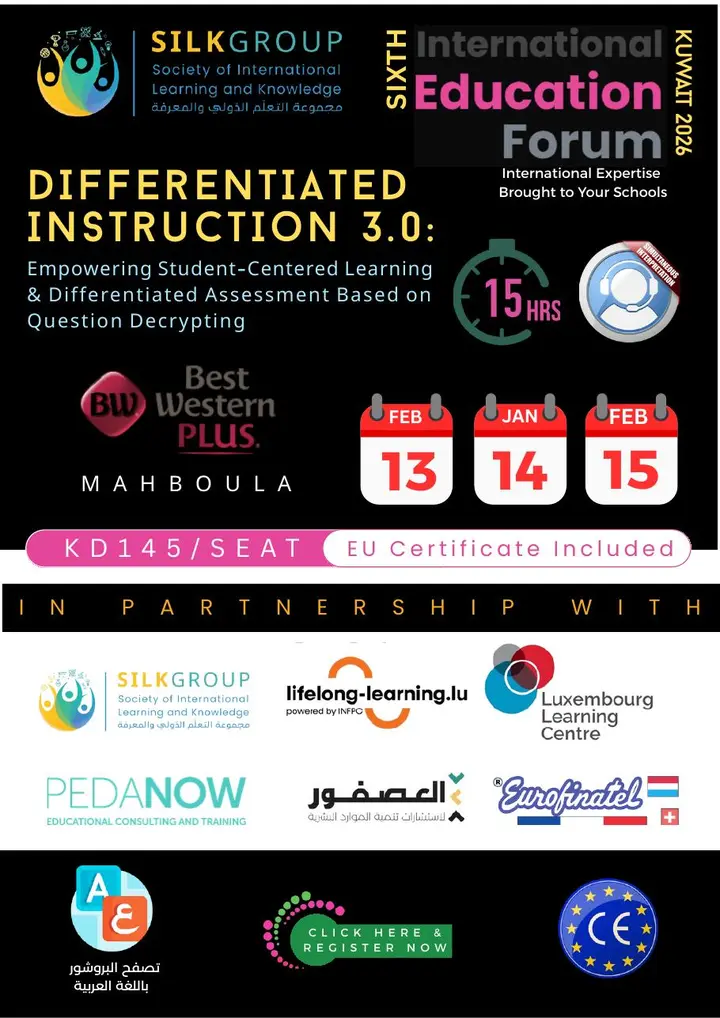
Differentiated Instruction 3.0
This 15-hour pathway helps teachers respond to differences in student readiness, interests and learning profiles without losing a shared learning goal. Across five sessions, participants explore the four pillars of differentiation—content, process, product and environment—alongside student voice, choice and flexible grouping.
Teachers practise question decrypting to help students unpack factual, conceptual, procedural and reflective questions. They then design tiered activities, feedback cycles, rubrics and assessments that offer fair routes into learning and make growth visible.
Plan student-centred lessons and flexible groups
Use question decrypting to deepen understanding
Create differentiated tasks and growth-focused assessments
03
Unlocking Dyslexia
This program helps educators recognise possible signs of dyslexia, understand the assessment and referral process, and distinguish it from common misconceptions. It looks at how reading and writing difficulties affect learning, confidence, classroom participation and relationships with peers.
Participants explore phonics practice, multisensory teaching, visual and memory supports, and ways to adapt instructions, marking and assessment. The program also covers collaboration with families, individual learning plans and practical steps toward a dyslexia-friendly school.
Recognise signs and understand referral pathways
Adapt teaching, homework and assessment
Support wellbeing and work with families
04
Active Learning
Teachers explore constructivist and brain-based approaches that place students in the work of learning instead of leaving them as passive listeners. The program connects how learners acquire, process and apply knowledge with purposeful classroom strategies such as inquiry, pair work, teamwork and problem-solving.
Participants redesign learning tasks to make them relevant, collaborative and open to reflection. They practise combining subject content with thinking and communication skills, then use formative checks to adjust the lesson and confirm what students understand.
Design inquiry and authentic learning tasks
Build collaboration, discussion and critical thinking
Check understanding and refine teaching
05
Emotional Intelligence
Designed for educators and school leaders, with applications for students and families, this program explores how emotions shape attention, relationships and learning. Participants develop self-awareness, empathy and the ability to recognise and regulate responses to stress while building a supportive, relationship-centred classroom.
Through discussion and activities, they practise listening, reading non-verbal cues, responding rather than reacting, and helping students navigate change and setbacks. The original program is structured as ten hours across two days and can be adapted to the audience.
Recognise emotions and respond constructively
Strengthen empathy and classroom relationships
Support resilience and student wellbeing
06
Project-Based Learning: Finnish Model
This ten-hour program has two connected parts. First, teachers learn how to teach and model communication and collaboration explicitly so students can work productively together. Next, they examine Finnish approaches to project-based learning through real project examples and an investigative learning process.
Participants plan projects that combine subject knowledge with transferable skills, invite student input into the learning process and use assessment throughout the project. They leave with concrete tools for designing meaningful tasks, teamwork and reflection.
Teach communication and collaboration deliberately
Design inquiry-led projects with student input
Combine content, skills and assessment in a project plan
Flagship programmes
Explore two learning pathways in detail
See how a documented programme connects its audience, format and teaching focus before discussing an adapted version with our team.
Professional development is a cycle, not a single event.
As outlined in the SILK Group profile, a school first identifies its learning needs with staff and leaders. A focused development plan then connects training to classroom practice, peer learning and evidence of student progress.
01
Identify needs
Review learner evidence, teacher feedback and institutional priorities together so the learning goal is specific.
02
Plan and learn
Design relevant workshops and shared inquiry, with time for teachers to try ideas and examine student work.
03
Apply and review
Use classroom observation, reflection and collaborative discussion to adjust practice and plan the next cycle.
Adapted from the SILK professional development cycle and learning communities in the company profile.
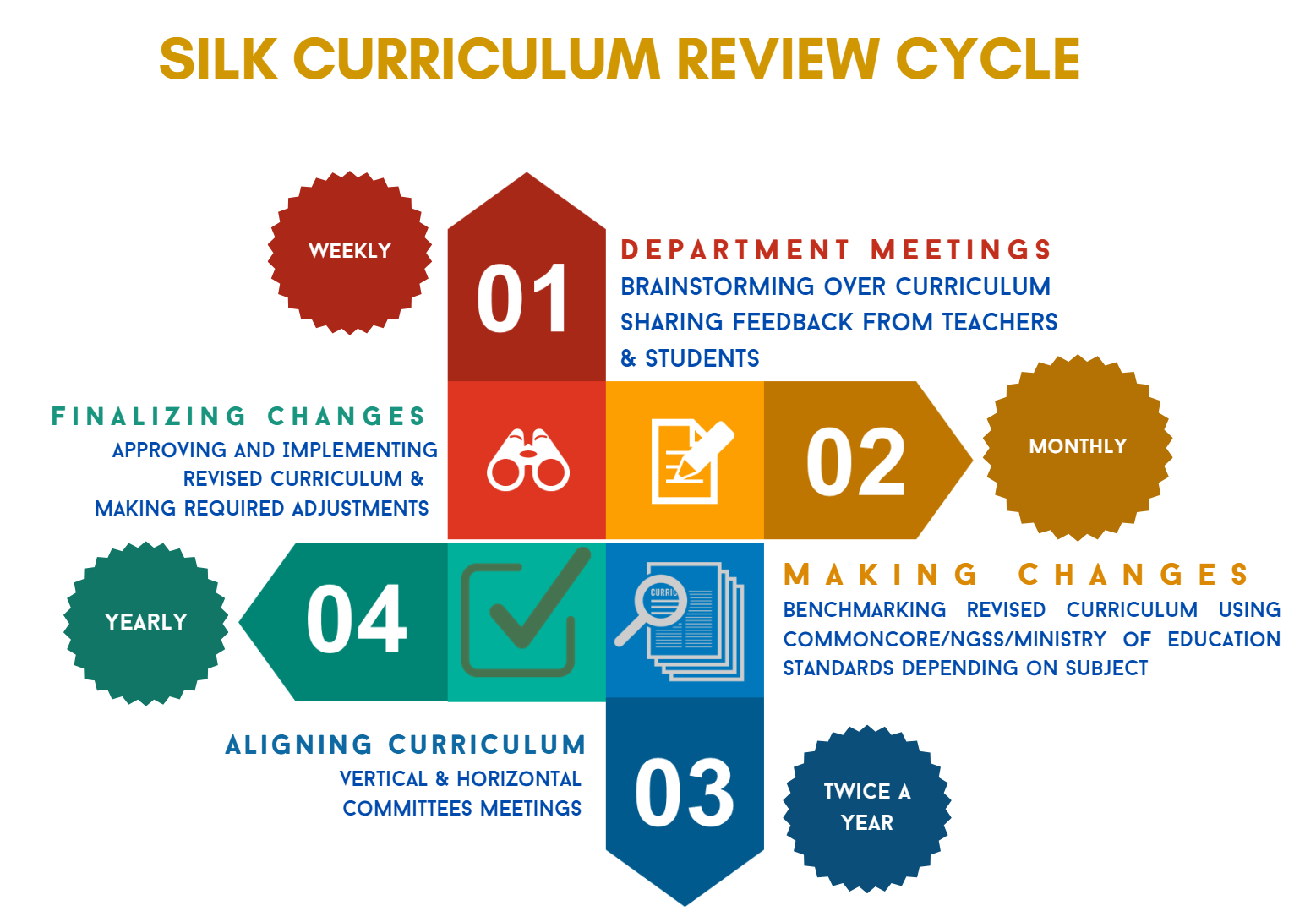
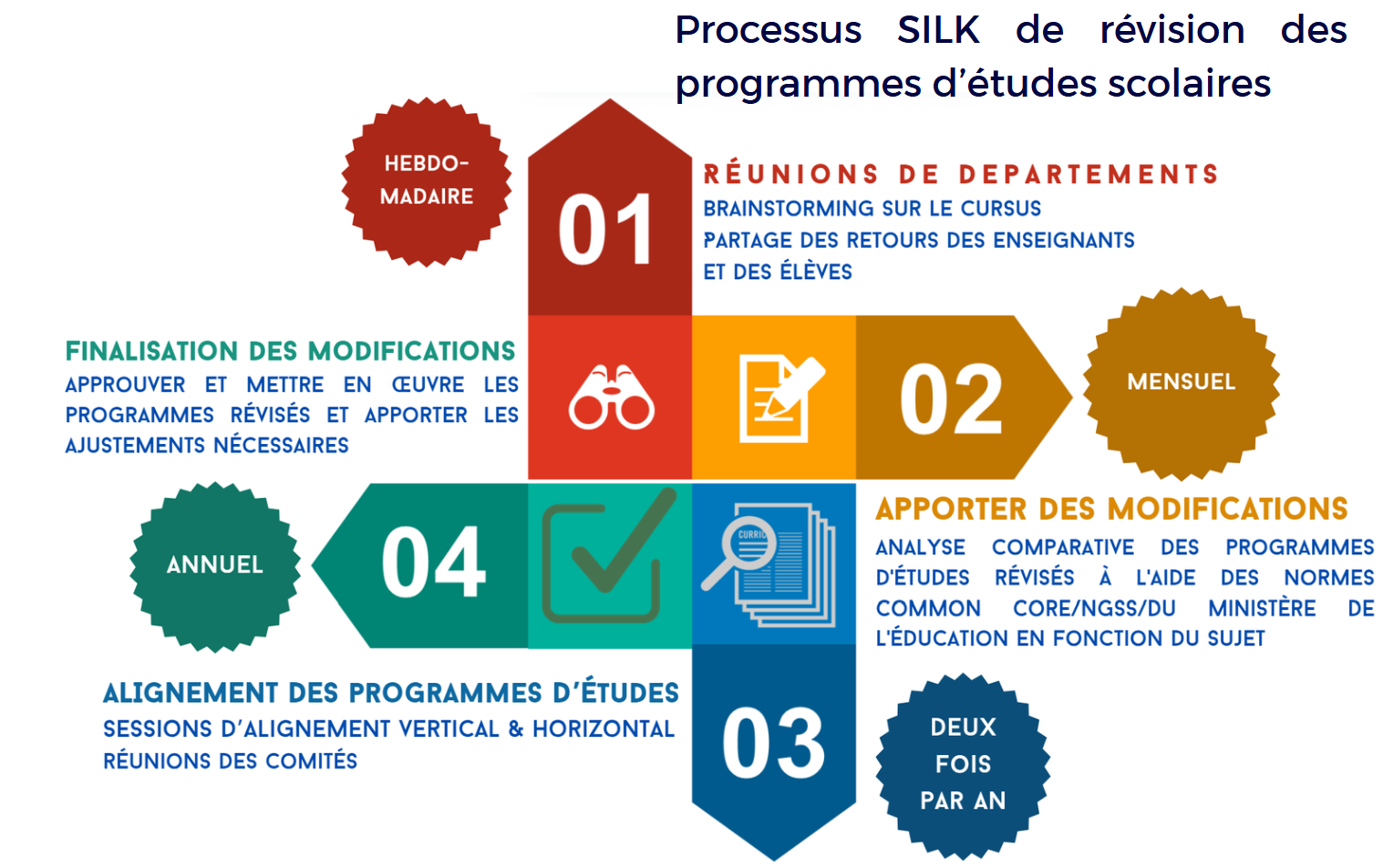
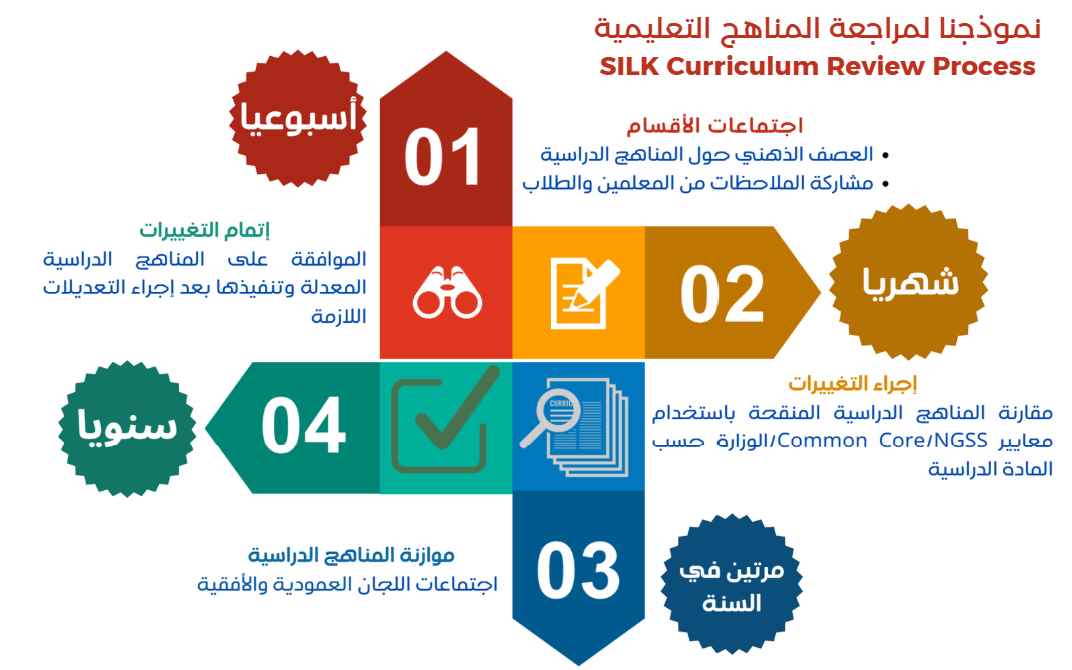
SILK academic models
See how learning and curriculum improvement continue over time.
Each stage creates evidence for the next, helping schools move from isolated activities to sustained professional and curriculum development.
Preparation and development beyond the classroom workshop.
Language development
English and other language programs supporting communication, fluency and academic participation.
Foundation & bridging programs
Essential knowledge, learning habits and transition support for students, new educators and developing teams.
Academic skills
Reading, writing, study strategies, collaboration and learner independence adapted to the target group.
Training catalogue
More areas we can deliver
This is a non-exhaustive catalogue. SILK also designs complete training plans from institutional needs analysis and improvement priorities. Select a card for a short briefing.

 01
01